

- Tel: +86-577-65481658
- Fax: +86-577-65481608
- Email: pansheldon@vip.163.com
- Add: No.15, Gongshang Rd, Huling Town, Ruian City, Wenzhou, Zhejiang Province, P.R.China
Street lights, also known as street lamps, illuminate roadways, parking lots, sidewalks, and other public areas. They improve security and driving safety by enhancing vision in poor light conditions. They are often used with other traffic safety equipment to enhance visibility of equipment, obstacles, or darkened common areas. The primary function of street lights is to illuminate objects or areas that would otherwise be dark and out of focus at night. Street lights rely on light emitting diode (LED), incandescent, high pressure sodium, low pressure sodium, mercury vapor, metal halide, and high intensity discharge (HID) bulb technology to provide the appropriate amount, color, and temperature of light for a specific application. LED street lamps are the most current technology, offer the most amount of light for power consumption, and require minimal maintenance with longer bulb life.
Advantages of Street Light
Improved visibility and safety
Street lights illuminate roadways, sidewalks, and public spaces, improving visibility for drivers, pedestrians, and cyclists. This increased visibility helps reduce the risk of accidents and improves overall safety on the streets.
Crime prevention
Well-lit streets can deter criminal activity by increasing the perception of surveillance and making it easier for people to see and report suspicious behavior. Criminals are less likely to operate in well-lit areas due to the increased risk of being seen and caught.
Enhanced security
Street lights help improve security by making it easier for security cameras to capture clear footage, deterring intruders, and providing a sense of safety for residents and visitors.
Promotion of economic activity
Well-lit streets create a more inviting and welcoming environment for businesses, encouraging economic activity such as shopping, dining, and entertainment in commercial areas.
Improved quality of life
Street lights contribute to the overall quality of life in urban and suburban areas by creating a sense of community, enabling nighttime activities, and promoting social interactions.
Navigation and wayfinding
Street lights help people navigate unfamiliar areas, find their way around at night, and locate important landmarks, such as hospitals, police stations, and public transportation stops.
Public transportation
Street lights make it safer and more convenient for people to use public transportation services such as buses and trains, especially during early mornings or late evenings when natural light is limited.
Emergency response
Street lights facilitate emergency response efforts by providing clear visibility for emergency vehicles and personnel to quickly reach and assist those in need.
-
 Add to Inquiry
 -
 Add to Inquiry
 -
 Add to Inquiry
 -
 Add to Inquiry
 -
 Add to Inquiry
 -
 Add to Inquiry
 -
 Add to Inquiry
Why Choose Us
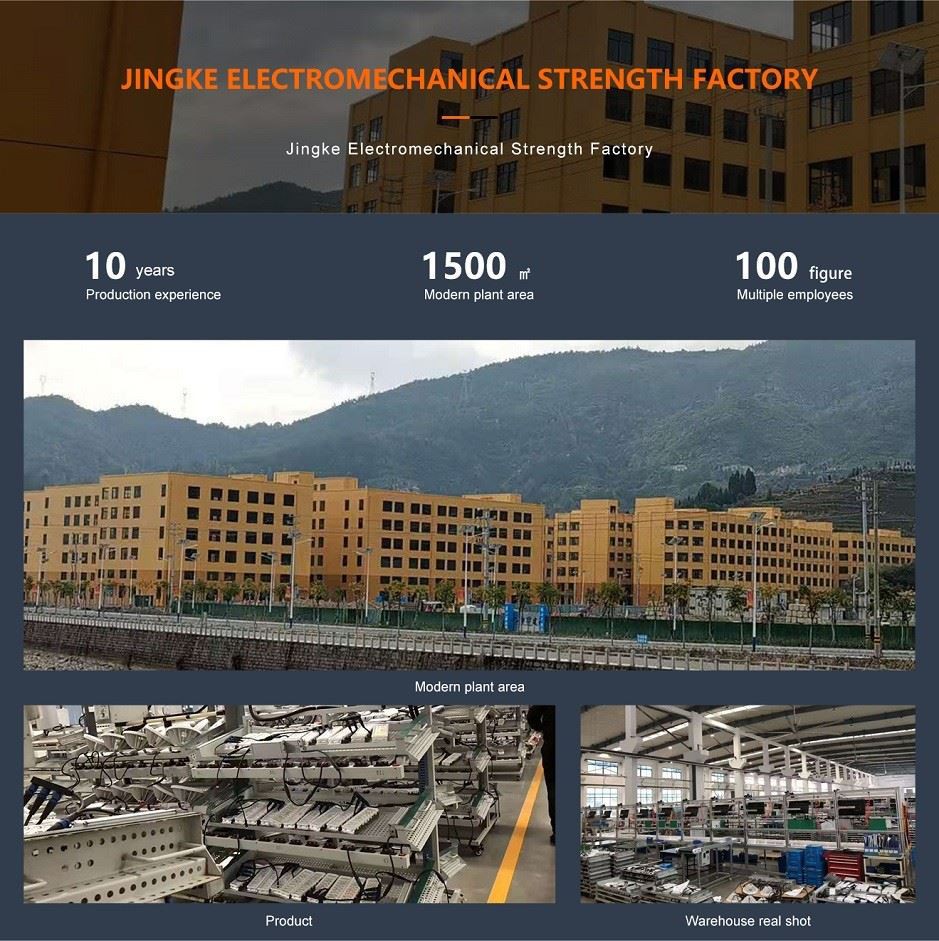
Our factory
Ruian jingke electromechanical co., ltd. Was established in 2011, specializing in the research and development, production and sales of led lighting products for gas stations.
Our services
Give customers a detailed introduction before the sale, guide customers to buy the most suitable products, understand the maintenance after installation and use of customers, and provide customers with 5 years of quality assurance.
Our certificates
Tuv cb certification, national explosion-proof certification, first-class energy-saving and energy efficiency certificate, saso certification.
Our people
The company has 8 r&d personnel, mainly engaged in structural, electronic and optical design, providing customers with oem products, and striving to organically combine innovative intelligent technology with industrial design.

Power
The street lights are accessible in various power ranges, such as 100W, 150W, 200W, 400W, and so on. The power consumption of the light is a vital factor to curtail total energy expenses.
Operating Temperature
Operating temperature is a specific temperature range the light is constructed to operate. The outdoor street lights have a good enough operating temperature to resist various weather elements.
Brightness
The brightness produced by a street light varies from one model to another. Though all of the decent street lights produce bright light, some high-end street lamps generate super bright lighting to illuminate a large area.
Supply Voltage
The supply voltage is the voltage provided to the light itself to deliver the power. It is crucial to select a voltage that shows compatibility with the already existing infrastructure.
Photo Sensor Activated
Almost all street lights come with a built-in photo sensor to ensure that the light is on only when the surroundings are dark.
Integrated Solar Panel
The solar street lights are equipped with a solar panel as the primary power source or backup to lessen operational expenses.
Street lighting
Both rural and urban areas have a variety of streets, such as primary streets, secondary streets, etc. Different street lamp situations require different types of street lights, different wattages, and different light distributions. As technology advances, led street lights are a cost-effective and sustainable option for roads and paths in cities, towns, and rural areas.
Highway lighting
The expressway is the road connecting the city and the city, and the road connecting the city and the countryside. In this case, there will be no non-motorized lanes for motor vehicles and pedestrians. In addition, the road surface of the expressway is very smooth, there are no obvious potholes, the road condition is maintained well, and the safety factor is high. Therefore, most highways do not need to install street lights. At the same time, considering that the cost is too high, it is not suitable to install street lights on the highway.
Intersection lighting
These types of street lights are often used at road and street intersections so that drivers must make quick decisions when they spot potential hazards. In this case, led street lights should be placed at intervals to keep the light even and eliminate the driver's eyestrain. When necessary, high mast lights can be set up at intersections to provide necessary lighting for drivers and pedestrians.
Square lighting
Squares are an important part of people's lives, people spend more time dancing/chatting/playing in squares at night, so square lighting has become very necessary. Plaza lighting usually uses led area lights and led flood lights, but there are also many led street light manufacturers that have also developed light distributions suitable for plaza lighting to reduce costs and expand the variety of product functions.
Parking lot lighting
With the development of the economy, automobiles have become the main means of transportation for the public. Some shopping malls, supermarkets, and hospitals will be equipped with parking lots to provide convenience for people, and the parking lot lighting is thus generated. Good parking lot lighting not only protects pedestrians but also makes a good impression to protect your business. Led street lights and post-top lights provide bright, energy-efficient lighting for parking lots of all sizes. Different parking lots also require lights with various mounting options, including straight-arm pole mounts, adjustable skid mounts, wall mounts, and more.
Outdoor industrial and logistics area lighting
We know that any large warehouse and logistics area has a lot of space in front of the entrance to facilitate the passage of vehicles through the area. Therefore, this large space needs to be illuminated by lamps at night to avoid the existence of dark areas, otherwise, it may increase the driver's blind spot and increase potential risks. At the same time, the loading and unloading area also needs enough lighting to guide the driver, which is also convenient for workers to load and unload goods.
Application of Street Light
Residential streets
Street lights are an excellent choice for illuminating residential streets. They provide bright light, ensuring visibility and safety for residents. They are also energy-efficient, which means that they can help reduce electricity bills.
Commercial areas
Street lights are ideal for commercial areas such as parking lots and shopping centers. They provide bright light that enhances visibility and improves security. They are also cost-effective since they do not require electricity from the grid.
Public spaces
Street lights are widely used in public spaces such as parks, pathways, and public squares. They are ideal for illuminating these areas, providing a safe and secure environment for people to enjoy.
Rural areas
Street lights are also used in rural areas where there is no access to electricity. They are particularly useful in areas where it is difficult to lay electrical cables. They provide bright light, ensuring visibility and security for residents.
Light bulb
This is the most important piece- it's the light source that provides illumination. The type of bulb used in a streetlight depends on the lighting requirements of the area and its budget.
Light fixture
This is the housing that holds the light bulb. It helps protect the bulb from damage, weather, and other elements.
Power source
The power source is typically electricity, but solar-powered street lights are becoming more common.
Pole
The pole is what holds the entire street light fixture in place. It's usually made of metal or concrete and must be strong enough to endure wind, rain, and other environmental factors.

Cement street light poles
More than ten years ago, cement street light poles were very common, mainly attached to urban power towers, too heavy, large transportation costs, unstable foundations, prone to accidents, and now they are basically eliminated.
Iron street light poles
The railway light pole is made of high-quality Q235 steel, and the appearance is sprayed with anti-corrosion, hot-dip galvanized, and very hard, which is also the most common and most used street lamp pole in the current street lamp market.
Fiberglass street light poles
FRP lamp pole is an inorganic non-metallic material with excellent performance and a wide variety, which has good heat resistance, insulation and corrosion resistance, but poor wear resistance and brittleness, so it is in the market. The application is not widespread.
Aluminum alloy street light pole
Aluminum alloy street lamp pole is made of high-strength aluminum alloy, aluminum alloy has high strength, super corrosion resistance, and is very beautiful, the surface is more high-grade, in addition, aluminum alloy is easier to process than pure aluminum, high durability, wide range of applications, good decorative effect, widely used in the street lamp pole industry, exported to foreign countries.
Stainless steel street light pole
Stainless steel poles are high-quality steel second only to titanium alloys, which have the properties of chemical and galvanic corrosion resistance. Regular manufacturers generally use hot-dip galvanizing for the surface treatment of the lamp pole, and the service life of the hot-dip galvanized lamp pole can reach 15 years, which is much lower than that of cold galvanizing.
Street Light:Troubleshooting and Maintenance Tips
Replacing bulbs and lamps
It is crucial to replace burned-out or dimming bulbs promptly to maintain consistent lighting levels. Always choose high-quality replacements compatible with your lighting system, and follow appropriate safety measures during the replacement process.
Cleaning fixtures and lenses
The buildup of dust, dirt, and grime can obstruct light output, leading to dim or inconsistent lighting. Regularly cleaning fixtures and lenses can help maintain optimal light levels and prolong the life of your lighting system. You also have the opportunity to spot any damage or wear that may require repairs or replacements.
Addressing electrical issues
Faulty wiring, flickering, and inconsistent light levels often indicate electrical issues. It is advisable to consult with a professional when dealing with electrical problems to ensure safety and prevent further damage to the system.
Pole and hardware maintenance
Corrosion and rust can compromise the structural integrity of poles and mounting hardware. Regular inspections, timely painting, and applying anti-corrosion treatments can help prevent these issues and enhance the lifespan of the hardware.
Timely vegetation management
Overgrown vegetation can obstruct light and limit the effectiveness of the lighting system. Regular trimming nearby trees and shrubs can help prevent physical damage and ensure optimal illumination. At the same time, vegetation management can also help improve the aesthetics of the surrounding area.
Regular cleaning schedule
A regular cleaning schedule can aid in the proper upkeep of the street lighting system. This includes cleaning fixtures and lenses, trash removal, and clearing any obstructions around the light. By keeping the area clean, you can enhance the performance and lifespan of your street lights.
Process of Street Light
Design and Development
The first step of any light production process is the design and development stage. This stage involves creating a prototype or mock-up that will provide an idea of how the finished product should look like. Additionally, engineers are responsible for designing the circuitry and components needed to power the street light.
01
Manufacturing
After the design and development phase is complete, it's time for manufacturing to begin. This stage involves producing components for the lighting system, such as glass fixtures, pole mounts, wiring, lamps, and other components that require specific procedures.
02
Testing
Before a street light can be used, it must be tested to ensure that it works correctly and meets safety standards. This includes testing the electrical components of the system as well as making sure all parts are properly secured.
03
Installation
Once all of the components are manufactured and tested, it's time for installation. This stage involves assembling the street light and connecting it to the power source. Additionally, installation technicians must ensure that all components are properly connected and functioning correctly.
04
Maintenance
After a street light is installed, it needs regular maintenance in order to keep it running efficiently. This includes changing out bulbs, cleaning fixtures, and making sure the wiring is secure.
05
Different power supply
Regular street lights are powered by electricity, so wires will go through the poles, so there will be a electrician door for wire connection. And solar street lights are powered by the battery, so there is no need for maintenance in the bottom part of the poles.
Structure
Solar street light poles will have a separate mounting brackets for solar panel, while the regular street light poles don't have.
Maintenance
Because solar panels or the batteries need to be replaced periodically, the solar street light poles require more maintenance.
Thickness
The solar panel is very big size especially when the solar street light watt is up to 80w or 100w. And with big solar panel on the top, when typhoon comes, both the poles and the solar panel brackets need to be stronger to ensure the whole structure will be stable.
Our Factory
Ruian Precisiontech Machinery & Electronics Co., Ltd.. was established in 2011, specializing in the research and development, production and sales of LED lighting products for gas stations. Factory products have passed national explosion-proof, European CE, German TUV, IP65 and other certifications.The company has 8 R&D personnel, mainly engaged in structural, electronic and optical design. The company always adheres to the market-oriented, and takes technological innovation and model innovation as the foundation of the factory. In terms of quality assurance, we implement a quality control system from incoming materials, manufacturing processes, finished products to shipments; at the same time, we have established a quality assurance system including a supplier management system. In order to improve the combat effectiveness of all staff, the company has formulated a systematic training plan and implemented it by special personnel.
Our Certificate
TUV CB certification, national explosion-proof certification, first-class energy-saving energy efficiency certificate, SASO certification

FAQ
