

- Tel: +86-577-65481658
- Fax: +86-577-65481608
- Email: pansheldon@vip.163.com
- Add: No.15, Gongshang Rd, Huling Town, Ruian City, Wenzhou, Zhejiang Province, P.R.China
Indoor lighting refers to the artificial illumination of indoor spaces such as homes, offices, and other buildings. It is designed to provide sufficient light for people to see and perform various activities indoors, regardless of the natural lighting available. Indoor lighting can also create a desired ambiance, enhance the appearance of the space, and provide a sense of comfort and security.
Advantages of Indoor Light
Improve mood and atmosphere
Proper indoor lighting can significantly impact your mood and overall well-being. Soft, warm lighting can create a cozy and inviting atmosphere, perfect for relaxing after a long day.
Improve productivity
Good indoor lighting is essential for improving productivity in workplaces such as offices or study areas. Bright light sources, such as overhead or task lights, can help reduce eye strain and improve concentration, making it easier to focus on the task at hand.
Improve safety
Inadequate indoor lighting can create safety hazards by creating dark spots or shadows, increasing the risk of accidents such as slips or falls. Well-lit spaces are essential for safely navigating a room, especially in areas such as stairways, hallways, or bathrooms where visibility is critical.
Highlight interior design features
Indoor lighting is an essential design element that can highlight architectural features or decorative elements within a space. You can draw attention to focal points such as artwork, furniture, or feature walls by strategically placing fixtures such as sconces or track lights.
Support circadian rhythm
The quality and intensity of indoor lighting plays a vital role in regulating our body's natural sleep-wake cycle, known as the circadian rhythm. Exposure to bright light during the day helps maintain alertness and energy levels, while dimming the lights at night signals our bodies to prepare for a restful sleep.
Energy efficiency
As technology advances, modern indoor lighting fixtures are designed to be more energy efficient than traditional incandescent bulbs. Led lights consume significantly less energy while producing brighter lighting, making them an environmentally friendly choice for reducing electricity consumption.
-
 Add to Inquiry
 -
 Add to Inquiry
 -
 Add to Inquiry
 -
 Add to Inquiry
 -
 Add to Inquiry
 -
 Add to Inquiry
 -
 Add to Inquiry
 -
 Add to Inquiry
Why Choose Us
Our factory
Ruian jingke electromechanical co., ltd. Was established in 2011, specializing in the research and development, production and sales of led lighting products for gas stations.
Our services
Give customers a detailed introduction before the sale, guide customers to buy the most suitable products, understand the maintenance after installation and use of customers, and provide customers with 5 years of quality assurance.
Our certificates
Tuv cb certification, national explosion-proof certification, first-class energy-saving and energy efficiency certificate, saso certification.
Our people
The company has 8 r&d personnel, mainly engaged in structural, electronic and optical design, providing customers with oem products, and striving to organically combine innovative intelligent technology with industrial design.
Recessed fixtures
Recessed fixtures are any indoor lights fully contained inside your walls, ceiling, or floors. While that wording might sound fancy or complex, it's basically just the interior design way of describing the fixtures that lay flush with your ceiling or walls. On the other hand, fixtures that protrude from your walls, floors, or ceiling are not recessed.
Track lighting
Your home's pre-installed fixtures aren't the only way you can direct light from your ceiling toward your floors. Track lights mount to and protrude from your ceiling. They point directly downward, so you can use them to illuminate hallways or the very center of a room. They have a high-class and artistic feel, but you might need an electrician to help you properly install them.
Pendants
Pendants come in a wide range of colors and styles that seamlessly blend into any home decor. You can easily set up pendants by yourself (but having some friends help never hurts). Just attach some sturdy hooks to your ceiling, then run your pendant's wire through your hooks and along walls and floors while keeping it out of view. Pendants are swanky like their track lighting counterparts, but they can be a lot easier to set up than track lights. So too can another type of indoor light often wrongly seen as challenging to install...
Wall sconces
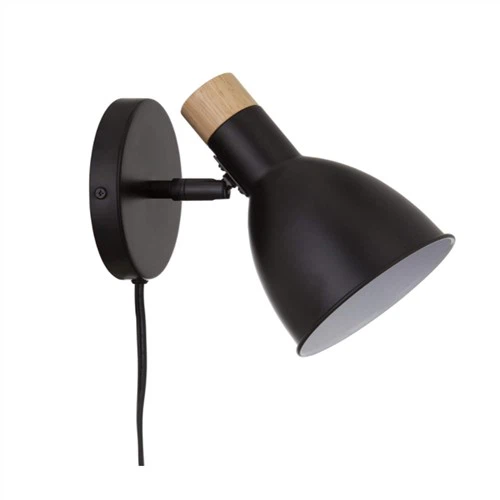
Wall sconces extend from your wall to illuminate your hallways and side tables, so you might think that using them requires an electrician installing wiring behind your walls. But that isn't always the case! Plug-in wall sconces solve this problem- just keep the wire well-hidden, plug it in, and securely mount your sconces. Chances are that nobody other than you will know that you've gone the plug-in route instead of making a more permanent investment.
Ceiling lighting
Speaking of permanent, if you need a consistent, reliable foundation for your indoor lighting design, install ceiling fixtures. We don't mean just standard recessed ceiling fixtures - we mean chandeliers, pendants that you mount close to your ceiling, and even low-hanging lights. Without the much-needed lighting cornerstone that ceiling lights can provide, your indoor space, whether your living room, bedroom, or kitchen, might be imperfectly lit.
Ambient lighting
If you use fixtures on (or in!) your ceiling to build your well-lit foundation as we just described, then you're using what's called ambient lighting. This is one of the three major types of indoor lighting, and many fixtures and styles fall under it. For example, a floor lamp powerful enough to brighten your whole room is ambient lighting. It creates a base layer of soft or bright white, off-white, or yellow hues for your room that you can build on with the other two major types of fixtures: task lighting and accent lighting.

Stairs and hallways
Stairways and hallways should be lit adequately to ensure the safety of those who use them. In hallways, installing fixtures every 4-6 feet is an effective way to illuminate them, both to define their form and shape and to highlight artwork and textures. Lighting can also be used to make a space look more spacious and brighter.
Utility rooms and garages
Your utility rooms and garages, like laundry rooms and workspaces, need plenty of ambient and recessed lighting. Your utility room needs task lighting, which can be a combination of track lighting and higher-intensity pendant lighting. Add some color and lighting to your utility room to focus on things like sorting, tinkering, and repairing.
Bathrooms
The primary goals of a bathroom are safety, functionality, and beauty, just like most rooms. A bathroom should have bright, even, shadow-free light. We recommend recessed lighting in bathrooms because it frees up space and provides a clean, glare-free look.
Kitchens
The kitchen is no longer just a place to cook. It has become the center of the home, used for a variety of tasks, including cooking, eating, working, cleaning, and lounging.
Dining rooms
The dining room should have the most beautiful light fixtures. They are the focal point of the room, so invest in a good above-dining light fixture. Typically, you'll see a chandelier or some kind of pendant light above the dining table, but you have other options too, including track lighting and pendant lights. Elegant glass can be used to dim the light, providing an almost candle-like feel.
Living room
The family/living room is often where the family spends the most time. Sometimes the dining room is the living room. Regardless, since most of our waking hours are spent in the living room, it's especially important to have a lighting scheme that works for you.
Material of Indoor Light
Stainless steel
Stainless steel is a metal alloy that contains chromium and nickel. Its durability, strength, and corrosion resistance make it a perfect choice for manufacturing lighting fixtures.
Glass
Glass is a material used to make lighting fixtures because it is durable, can be transparent or colored in any shape, and comes in a variety of styles such as blown glass, LED glass, stained glass, and etched glass.
Ceramics
Ceramics are a natural non-metallic material. It is used in a variety of products such as tableware, kitchenware, and decorations. Ceramic has good resistance to thermal shock, which means it won't crack or chip when exposed to sudden temperature changes.
Crystal
Crystal is a type of glass that is made from a combination of sand and other minerals. The most common types of crystals are lead glass, flint glass, and crystal glass. The main difference between these types of crystals is the amount of lead oxide in the mixture.
Plastics
Plastic is a common material for lighting fixtures. It is affordable and easy to mold into a variety of shapes. This versatility allows you to get creative and create a custom luminaire that perfectly matches your needs.
Wood
Wood is a renewable resource, so it's a great option for people looking to minimize their impact on the environment. Wood is also an excellent insulator, which means it keeps you cool in the summer and warm in the winter.
Determine the purpose of the room
Each room in your home serves a unique function, and the lighting should complement its purpose. For example, a dimmer light might be appropriate for a cozy living room, while a brighter light might be better for a kitchen or study room.
Take into account the room's size
Another important aspect to take into account when selecting an indoor lighting fixture is the room's size. A small room may require a less intense light fixture, while a larger room may need a more powerful one.
Choose a style that complements your décor
The style of the light fixture you choose should complement your home& décor. Whether you prefer modern, traditional, or eclectic, there are various lighting options available. Consider the colors and textures in the room and choose a light fixture that enhances the spaces overall aesthetic. At insightlighting, we pride ourselves on offering the best lighting solutions in qatar.
Determine the type of bulb
The type of bulb you choose will impact the quality of light in the room. Led bulbs are energy-efficient and have a longer lifespan than incandescent bulbs. Halogen bulbs are also energy-efficient and produce a bright, white light. Fluorescent bulbs are ideal for large rooms and spaces that require bright, even lighting.
Choose the right color temperature
Color temperature is measured in kelvin and describes the appearance of the light emitted from a bulb. Lower kelvin temperatures produce warm, yellow tones, while higher kelvin temperatures produce cool, blue tones. Consider the atmosphere you want to evoke in the space before selecting a color temperature that goes well with it.
Decide on the light fixture placement
The placement of the light fixture can make a significant difference in how the light illuminates the room. Wall-mounted sconces are ideal for accent lighting or creating a focal point, while floor lamps can provide ambient lighting in corners or alcoves. Pendant lighting is suitable for dining areas and kitchen islands, while chandeliers can create a dramatic effect in foyers or living rooms.
Indoor Lighting: Bulb Types
Incandescent
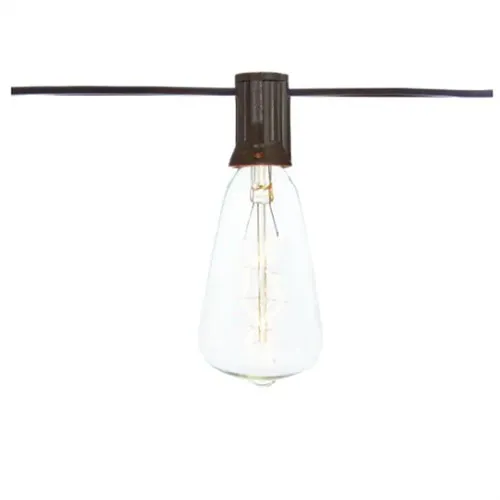
Incandescent bulbs have a filament that burns when electricity runs through it. They've been the standard interior lighting bulb choice for decades-mainly because of their low price-but are decreasing in popularity due to their inefficiency. Incandescent lighting wastes roughly 90% of the energy it uses to light a fixture and usually only last around a year, which actually makes them more expensive in the long run than their alternatives.
Halogen
Halogen bulbs also have a filament, but it's housed in a small tube of halogen gas that essentially allows the filament's burned particles to be recycled-making them slightly more efficient than incandescent bulbs. Halogen bulbs give off a brighter white light, so they're commonly used for track lighting and pendant fixtures.
Compact fluorescent light (CFL)
CFL bulbs are fluorescent bulbs, which use gas and even small amounts of mercury, that have been spiraled into a small shape to be used for everyday fixtures. CFL bulbs use minimal electricity but take time to heat up, which makes them better for fixtures you plan to leave on for a while.
Light-emitting diode (LED)
Instead of a filament, LED lighting uses a microchip that illuminates tiny lights inside the bulb. Interior LED lighting costs more than other bulb types, but uses around 90% less electricity than interior incandescent lighting, lasts almost 25 times longer, and doesn't use any hazardous materials.
Purpose
The first thing to consider when choosing indoor lighting is the purpose of the room or space you are lighting. Different spaces may require different types of lighting, such as task lighting for a home office or ambient lighting for a living room.
Brightness
The brightness of the lighting is another important factor to consider. The brightness of the lighting should be appropriate for the activity or tasks being performed in the room, and should also be comfortable for the eyes.
Colour temperature
The colour temperature of the lighting is another important consideration. The colour temperature can affect the mood and ambiance of a room, with warmer temperatures creating a cozy and relaxing atmosphere, and cooler temperatures creating a more energizing and stimulating environment.
Energy efficiency
Another important factor to consider when choosing indoor lighting is energy efficiency. Energy-efficient lighting can save you money on your energy bills and help to reduce your carbon footprint.
Style and design
The style and design of the lighting should also be considered, as it can have an impact on the overall aesthetic of the room. The lighting should complement the existing decor and style of the room.
Maintenance and lifespan
It is also important to consider the maintenance and lifespan of the lighting. Some types of lighting may require more maintenance than others, and some may have a shorter lifespan, which can affect the overall cost and convenience of the lighting.

Our Factory
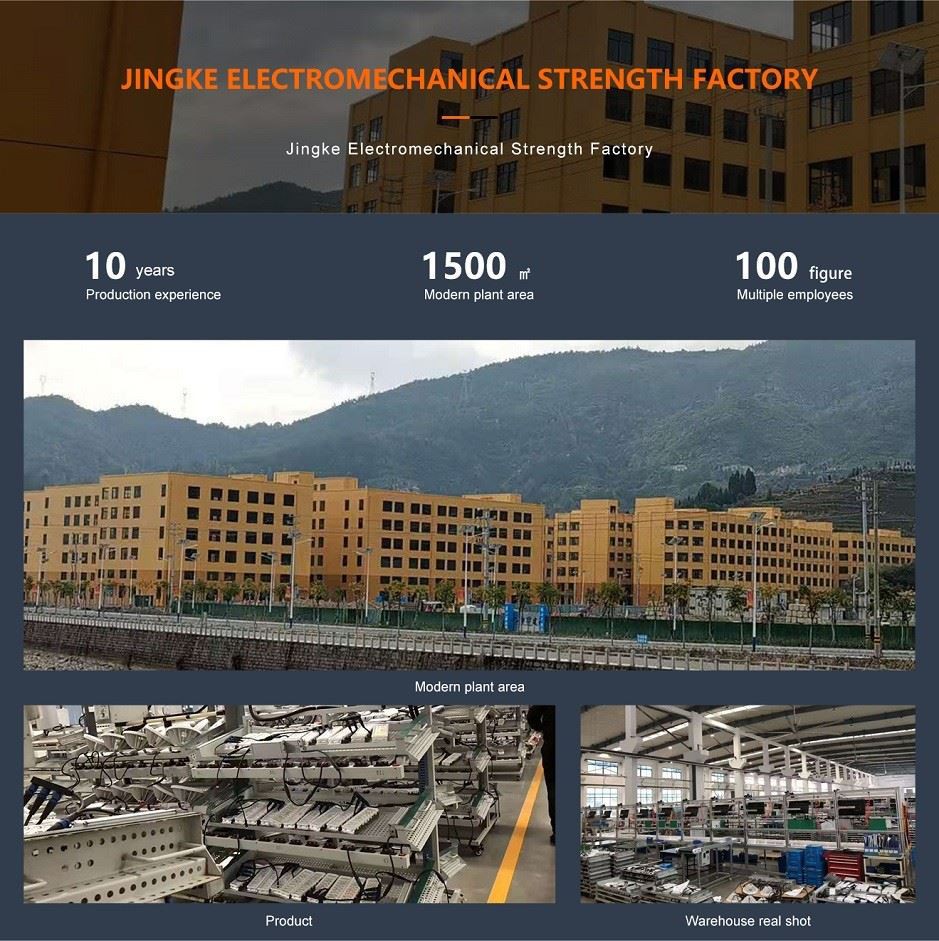
Ruian Precisiontech Machinery & Electronics Co., Ltd.. was established in 2011, specializing in the research and development, production and sales of LED lighting products for gas stations. Factory products have passed national explosion-proof, European CE, German TUV, IP65 and other certifications.The company has 8 R&D personnel, mainly engaged in structural, electronic and optical design. The company always adheres to the market-oriented, and takes technological innovation and model innovation as the foundation of the factory. In terms of quality assurance, we implement a quality control system from incoming materials, manufacturing processes, finished products to shipments; at the same time, we have established a quality assurance system including a supplier management system. In order to improve the combat effectiveness of all staff, the company has formulated a systematic training plan and implemented it by special personnel.
Our Certificate
TUV CB certification, national explosion-proof certification, first-class energy-saving energy efficiency certificate, SASO certification

FAQ
