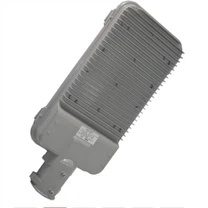


In the application process of high-power LED products and devices, electrostatic protection, heat dissipation, and welding have a great impact on their characteristics, which need to be highly valued by application-end customers.
1. Electrostatic protection of high-power LED products
LED is a semiconductor device, which is more sensitive to static electricity, especially for white, green, blue, and purple LEDs, it is necessary to prevent and eliminate static electricity.
1. The generation of static electricity:
①Friction: In daily life, any two objects of different materials contact and then separate, and static electricity can be generated, and the most common way to generate static electricity is to generate electricity by friction. The better the insulation of the material, the easier it is to generate electricity by friction. In addition, any two objects of different substances contact and then separate, can also generate static electricity.
②Induction: For conductive materials, because electrons can flow freely on its surface, if it is placed in an electric field, due to the repulsion of the same sex and the attraction of the opposite sex, the positive and negative ions will be transferred, and charges will be generated on the surface. .
③Conduction: For conductive materials, since electrons can flow freely on its surface, such as contact with charged objects, charge transfer will occur.
2. The harm of static electricity to LED:
①Due to the heat generated by the instantaneous electric field or current, the LED is partially injured, and the leakage current increases rapidly, and it can still work, but the brightness is reduced and the life is damaged.
②Due to the electric field or current destroying the insulating layer of the LED, the device cannot work (completely destroyed), and it appears as a dead lamp.
3. Static electricity protection and elimination measures:
For the entire process (production, testing, packaging, etc.), all employees who are in direct contact with LEDs must take measures to prevent and eliminate static electricity, mainly including:
1. Lay anti-static floors in the workshop and do a good job of grounding.
2. The workbench is an anti-static workbench, and the production machine is well grounded.
3. The operator wears anti-static clothing and wears anti-static wristbands, gloves or foot rings.
4. Apply ion fan.
5. Do a good job of grounding the soldering iron.
6. The packaging is made of anti-static materials.
Second, the heat dissipation of high-power LED products:
Due to the limitations of the current semiconductor light-emitting diode wafer technology, the photoelectric conversion efficiency of LEDs needs to be improved, especially for high-power LEDs. , the photoelectric conversion efficiency will gradually increase), which requires end customers to do a good job of heat dissipation when applying high-power LED products to ensure the normal operation of high-power LED products.
1. Requirements for heat sinks
Appearance and material: If the sealing requirements of the finished product are not high, convection can occur directly with the outside air environment. It is recommended to use aluminum or copper heat sinks with fins.
2. Effective heat dissipation surface area:
For 1W high-power LED white light (other colors are basically the same), our company recommends that the total effective heat dissipation surface area of the heat sink is ≥50-60 square centimeters. For 3W products, it is recommended that the total effective heat dissipation surface area of the heat sink is ≥150 square centimeters. Higher power may be increased depending on the situation and test results, and try to ensure that the temperature of the heat sink does not exceed 60°C.
3. Connection method:
When connecting the high-power LED substrate and the heat sink, please ensure that the two contact surfaces are flat and in good contact. ≥3.0W/m.k), the thermal grease needs to be applied evenly and in an appropriate amount, and then fixed with screws.
3. Welding of high-power LED products
1. When soldering, please note that it is best to choose a constant temperature soldering iron, the soldering temperature is below 260 °C, and the time for the soldering iron to contact the LED pad at one time does not exceed 3S;
2. For high-power LEDs encapsulated in silicone, the maximum heat-resistant temperature of silicone is 180°C, so the soldering temperature of LEDs should not exceed 170°C. Use low-temperature soldering iron and low-temperature solder paste (wire) for soldering, and the soldering iron contacts the LED pads at one time. The time does not exceed 3S.