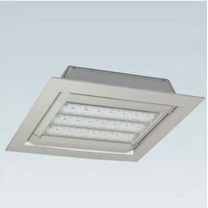


LED explosion-proof light is a kind of explosion-proof light. Its principle is the same as that of explosion-proof light, except that the light source is LED light source, which refers to various specific measures taken to prevent the ignition of surrounding explosive mixtures such as explosive gas environment, explosive dust environment, gas gas, etc. Measure light fixtures.
One of the very important explosion-proof principles of LED explosion-proof lamps is to limit the temperature of the surface of the casing, the surface of parts or the surface of electronic components in contact with explosive gases and explosive dust, and to limit the temperature of the electrical contact surface to be lower than its minimum ignition temperature or ignition temperature . Because LED is a solid-state cold light source, it has the advantages of high electro-optical conversion efficiency, low heat generation, low power consumption, safe and low operating voltage, and long service life. Therefore, high-power white LEDs are explosion-proof lamps, especially portable explosion-proof lamps. A very ideal electric light source for lamps.
LED explosion-proof lamp is a kind of electrical equipment used in special industries, mainly to solve lighting problems. It is characterized in that: 1. The illuminant is a high-power LED module, and a wide voltage input drive circuit is arranged between the illuminant and the battery; the wide voltage input drive circuit includes a constant current chip, and the constant current chip and the battery form a power module, The LED module is connected to the constant current chip, the power module and the LED module are glued together; the lampshade and the lamp housing are ultrasonically welded. 2. It takes advantage of the low calorific value of LED to achieve intrinsically safe explosion-proof, and the LED light source has a long life; the LED maintains constant brightness at the end of full charge and discharge; Effective heat dissipation ensures the stability of use, and is suitable for lighting in various industries such as coal mines, petroleum, railways, and flood control.