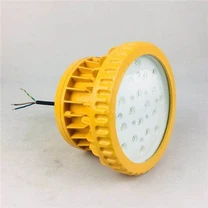
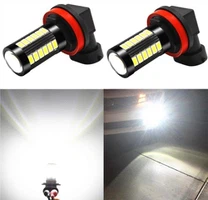
We know that led street lamps have higher requirements for brightness and greater heat generation, so the heat dissipation problem has always been a key problem that street lamp manufacturers need to solve. However, with the continuous development of technology, the heat dissipation problem of LED street lamps is also constantly developing. Let's take a look at how street lamp manufacturers deal with the heat dissipation problem of LED street lamps.
LED street lights are used outdoors, so they have strict environmental requirements. For example, poor heat dissipation directly leads to rapid aging of LEDs, reduced stability, and reduced lifespan.
Let us take an example. If the photoelectric conversion efficiency of a 10W white LED is 20%, then 8W of electrical energy will be converted into heat. If no heat dissipation measures are taken, the core temperature of high-power LEDs will rise rapidly. When its junction temperature (TJ) rises to a higher allowable temperature (usually 150°C), high-power LEDs will be damaged due to overheating.
At present, the main heat dissipation method on the market is to force heat dissipation by adding fans, heat pipes, loop heat pipes and temperature equalizing plates. In key heat dissipation locations, street lamp manufacturers use heat-conducting plates to design the lamp housing into a radiator shape to help LED street lamps effectively dissipate heat.
A little bit of understanding of street lights, you know that the price of street lights on the market is very different. If you understand the led street light market a little bit, you will find that the price difference of led street lights is very large. If the same led street light brand is different, the price may vary greatly.
First of all, the quality of the LED chip: We all know that the chip has a great influence on the price of LED street lights. Take chip sizes from 7*9mil to 10*23mil as a reference. The larger the size, the more expensive the relative price and the better the quality. Different brands of street lights use different chips, and of course the prices will vary.
Secondly, brightness is also one of the factors that affect the price of led street lights. In fact, in the use of LED lighting products, we can also find that the expensive LED lighting line is soft and not dazzling, while the relatively cheap LED lighting line is too white and bright, and long-term use is not good for the eyes.
In addition, even if different street lamp manufacturers of the same type of LED street lamps use different profiles, the LED lamps on the market basically have two profiles: semi-plastic and semi-aluminum tubes and all-plastic lamps. The all-plastic tube avoids the problem of electric shock, but the bigger problem is heat dissipation. Because all the heat is sealed in the tube, it cannot be dissipated at all, and the light decay is very serious, so it is not recommended. The price is relatively cheap.
In addition, the material of the semi-plastic and semi-aluminum tube is mainly to determine the thickness of the aluminum, and the heat dissipation effect must be at least 1.0mm to reach the standard. At present, the samples of some factories are basically 0.6-0.8MM thick, and the aluminum is sub-colored, which proves that there are more impurities. The price of street lamps is cheaper than the two, and the quality assurance is more expensive.