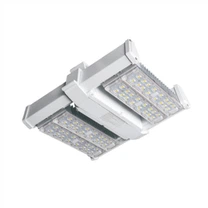


Today, LED lamps have replaced traditional lamps and become mainstream lighting products in the market. In the face of various types of LED lights on the market, which one should we choose?
Distinguish from the material, one is LED hard light strip, and the other is LED soft light strip made of flexible material. The LED hard light strip is assembled with a PCB hard board. The advantage of LED hard strip is that it is easier to fix, and it is more convenient to process and install. The disadvantage is that it cannot be bent at will. The LED flexible light strip uses FPC as the assembly circuit board and SMD LED for assembly. The thickness of the product is only the thickness of a coin, which does not take up space, and is easy to bend, suitable for various shapes.
In terms of color, LED lights are colorful, white, warm white, red, green, yellow, blue, etc. The colors can be distinguished according to the color temperature. Generally speaking, the color temperature is below 3300K, and the light color is reddish. Warm feeling; the color temperature is in the middle of 3000-6000K, and people have no particularly obvious visual psychological effect under this color tone, so it is called "neutral" color temperature, the color temperature exceeds 6000K, and the light color is bluish.
Purchase points:
1. Look at the packaging and trademarks. The state mandates LED lighting manufacturers to mark the following contents on the product packaging: rated voltage, voltage range, rated power, and rated frequency. Generally speaking, the trademark of high-quality products is of good printing quality, the logo is clear and recognizable, and it is not easy to wipe off with a soft damp cloth, and has the manufacturer's trademark and related certification marks.
2. Look at the appearance of the lamp. There should be no cracks, looseness and signs of prying between interfaces. In the process of installation and disassembly, the lamp head should not be loose or tilted. The plastic shell of the lamp must be an engineering plastic flame retardant, which is characterized by a texture similar to frosted glass on its surface. The surface of ordinary plastic is smooth and shiny, but it is easily deformed and flammable, and it is forbidden to be used in the production of energy-saving lamps.
3. Look at the working status. Under normal working conditions, the temperature rise of LED lamps should be relatively low. If the heat dissipation conditions are not good and the lamp beads work at high temperatures, the light decay will be large, and the life of the lamps will be greatly reduced. At the same time, if the lamp flashes quickly when it is turned on and off, it also indicates a quality problem.
4. Listen to the voice of work. Electromagnetic compatibility is an item that electrical appliances must pass, and the national electromagnetic compatibility test mark must be printed on the packaging of LED lighting products. We can also make a simple judgment through a small test. Bring a medium and short wave radio. When the lamp is working, put the radio nearby. The lower the noise received by the radio, the better the electromagnetic compatibility of the lamp under test. Listen to the sound of the LED lamp working in a quiet environment. If you can clearly hear the sound of the lamp working, it means that the power supply of the lamp is not very good.